
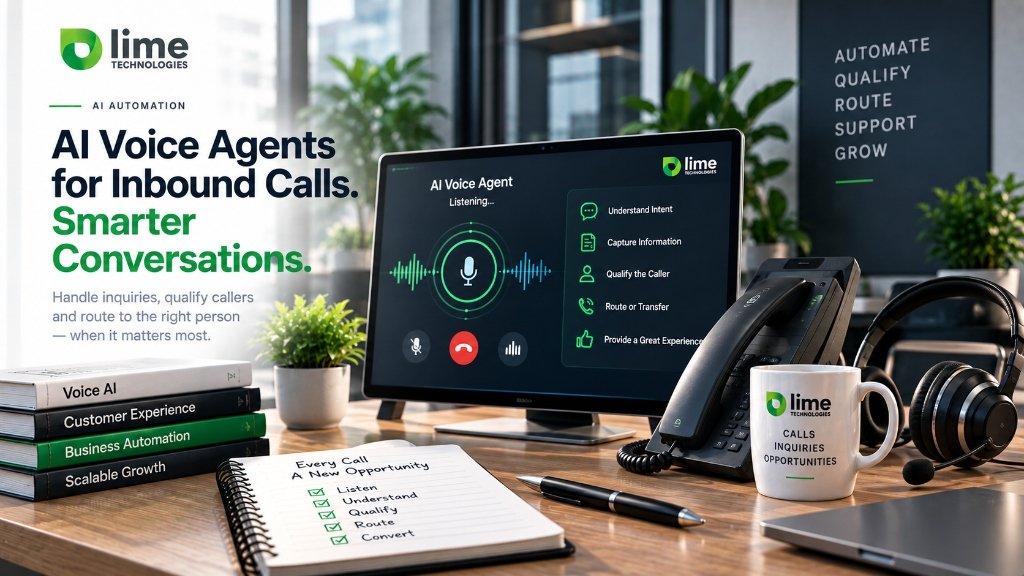
An AI voice agent fits into inbound telephone workflows by acting as an intelligent first tier: greeting callers with low-latency conversational audio, understanding natural spoken intent, gathering caller credentials and project context, and executing instant routing. Rather than navigating rigid numeric phone trees (IVR), callers explain their request conversationally. The agent resolves straightforward inquiries or completes structured qualification before executing a warm SIP transfer to the appropriate human team with full call context preserved.
For decades, inbound business telephony has relied on Interactive Voice Response (IVR) phone trees. Callers encounter the familiar monotone prompt: “Press 1 for sales, press 2 for support, press 3 to hear our hours again.”
These legacy systems create immense caller friction. Callers get trapped in recursive loops, struggle to match complex problems to rigid numeric options, or aggressively press “0” to reach any human operator. The result is frustrated customers, misrouted calls, and overburdened staff spending hours answering repetitive basic questions.
Modern conversational voice automation replaces rigid phone trees with intelligent telephony agents capable of understanding natural spoken language. At Lime Technologies, our AI voice agent implementations connect telephony networks with advanced language models to create fast, respectful, and operationally rigorous call experiences.
Beyond the Rigid IVR: The Mechanics of Modern Voice Automation
Unlike outdated automated systems, conversational voice agents do not listen for simple keywords or DTMF keypad tones. They process fluid human speech through an integrated five-stage pipeline operating in near real-time:
| Processing Stage | Underlying Technology | Operational Function |
|---|---|---|
| 1. Audio Ingestion | SIP Trunk / WebRTC Streaming | Captures real-time telephone audio stream with minimal network packet latency. |
| 2. Speech-to-Text (STT) | Low-latency Neural Transcription | Transcribes spoken caller dialogue into text in milliseconds, handling accents and background noise. |
| 3. Intent & Intelligence | Large Language Model + RAG | Parses caller intent, evaluates conversational context, and retrieves verified documentation. |
| 4. Text-to-Speech (TTS) | Ultra-realistic Neural Voice Synthesis | Synthesizes natural, human-like vocal responses with correct cadence, inflection, and tone. |
| 5. Action & Routing | Telephony PBX / API Dispatch | Executes external actions: CRM logging, SMS confirmation dispatch, or warm SIP transfer. |
The entire cycle operates with end-to-end latency below 800 milliseconds, producing a conversational cadence that feels natural, professional, and responsive.
Spoken Lead Qualification: Capturing Identity and Context
When an inbound prospect calls your business, the voice agent acts as an articulate, knowledgeable front desk coordinator:
- Professional Greeting: Greets the caller clearly, identifies itself as Lime Technologies’ automated assistant, and invites the caller to explain their reason for calling in their own words.
- Caller Intent Disambiguation: Understands complex spoken inquiries without requiring rigid keywords (e.g., “I need someone to look at our organic rankings because we lost half our traffic last Tuesday” is correctly recognized as an urgent SEO migration emergency).
- Information Verification: Tactfully captures and confirms spelling for essential caller details: caller name, callback number, company domain, and primary project objectives.
- Qualification Assessment: Validates whether the caller’s request aligns with firm capabilities and standard service parameters.
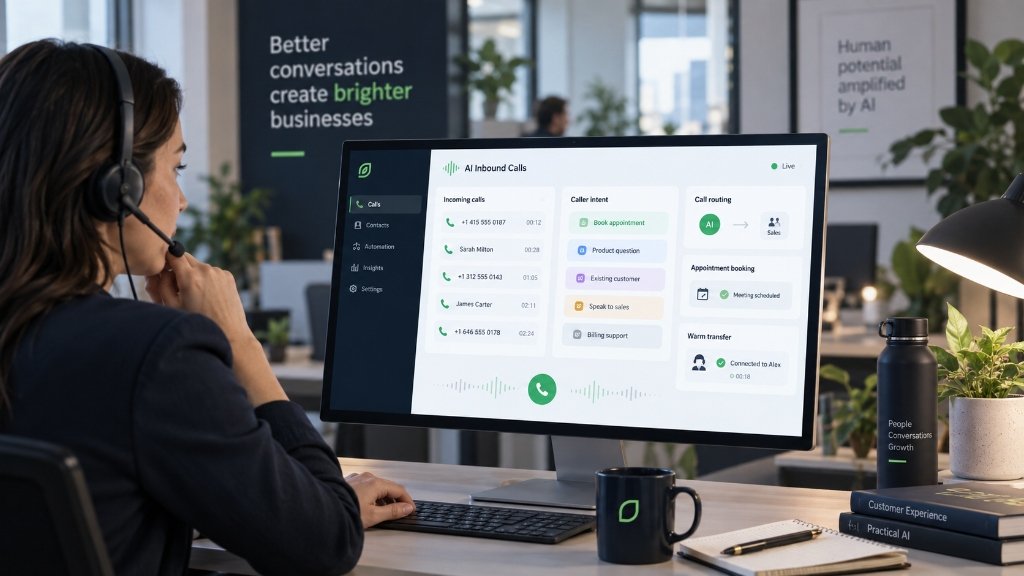
Deterministic Routing & Warm SIP Transfer
The greatest failure in automated telephony is the “cold transfer”—dumping a caller into an unmonitored queue where they must re-explain their entire situation to a human representative who has zero context.
Lime Technologies voice architectures enforce Warm SIP Transfers:
- Context Transmission: Before the caller connects to a human specialist, the voice agent generates a concise 3-sentence summary of the conversation and caller credentials.
- Whisper Screen: When the sales representative or account executive answers the call, the system plays an internal audio whisper (e.g., “Incoming call from John Doe, CEO of Acme Corp, inquiring about enterprise web development with a Q4 launch timeline.”).
- Bridge & Release: The agent introduces the caller to the specialist and drops off the line, ensuring the customer never has to repeat their name, problem, or project scope.
Operational Safety Policies and Human Fallback Protocols
Telephony requires strict operational boundaries. Voice agents must be programmed with rigorous safety fail-safes:
- Immediate Human Bypass: If a caller says “let me speak to someone” or “operator”, the agent must immediately initiate transfer without defensive resistance.
- Distress & Escalation Handling: Callers experiencing acute technical emergencies or expressing frustration bypass qualification trees and route immediately to priority queues.
- Speech Disambiguation Fallback: If severe background noise or poor cell reception prevents transcription after two attempts, the agent politely offers to send an SMS link to an online booking calendar.
- Recording & Compliance Transparency: Enforce all applicable regional telephony recording disclosures (e.g., “This call may be recorded for quality and training purposes”) at the onset of every inbound session.
What Voice AI Must Never Attempt
A voice agent is an operational multiplier, not a replacement for seasoned human professionals. Telephony agents should never be authorized to:
- Negotiate contract pricing, payment terms, or custom service discounts over the phone.
- Provide binding legal, financial, or engineering commitments.
- Pretend to be a real human staff member when asked directly about its automated nature.
- Handle confidential payment card details without dedicated PCI-compliant payment gateway integrations.
To evaluate how conversational voice and text automation can streamline your operational workflows, review our AI chat agent services, or explore our full capabilities across web, search, and software on the Services Hub.
- Retire rigid IVR trees: Conversational voice AI allows callers to speak naturally rather than navigating confusing numeric menus.
- Enforce warm SIP transfers: Pass conversational context and caller credentials to human specialists before bridging the line.
- Respect caller preferences: Always provide an immediate, resistance-free pathway to a human representative upon request.
- Operate with sub-second latency: Natural vocal conversation requires neural speech synthesis operating under 800ms end-to-end latency.